Residential — In Construction
Residence 03
A ground-up custom single-family residence in North Carolina — SIP structure over a precast foundation, a well-built envelope, and an integrated energy system with on-site solar and battery storage.
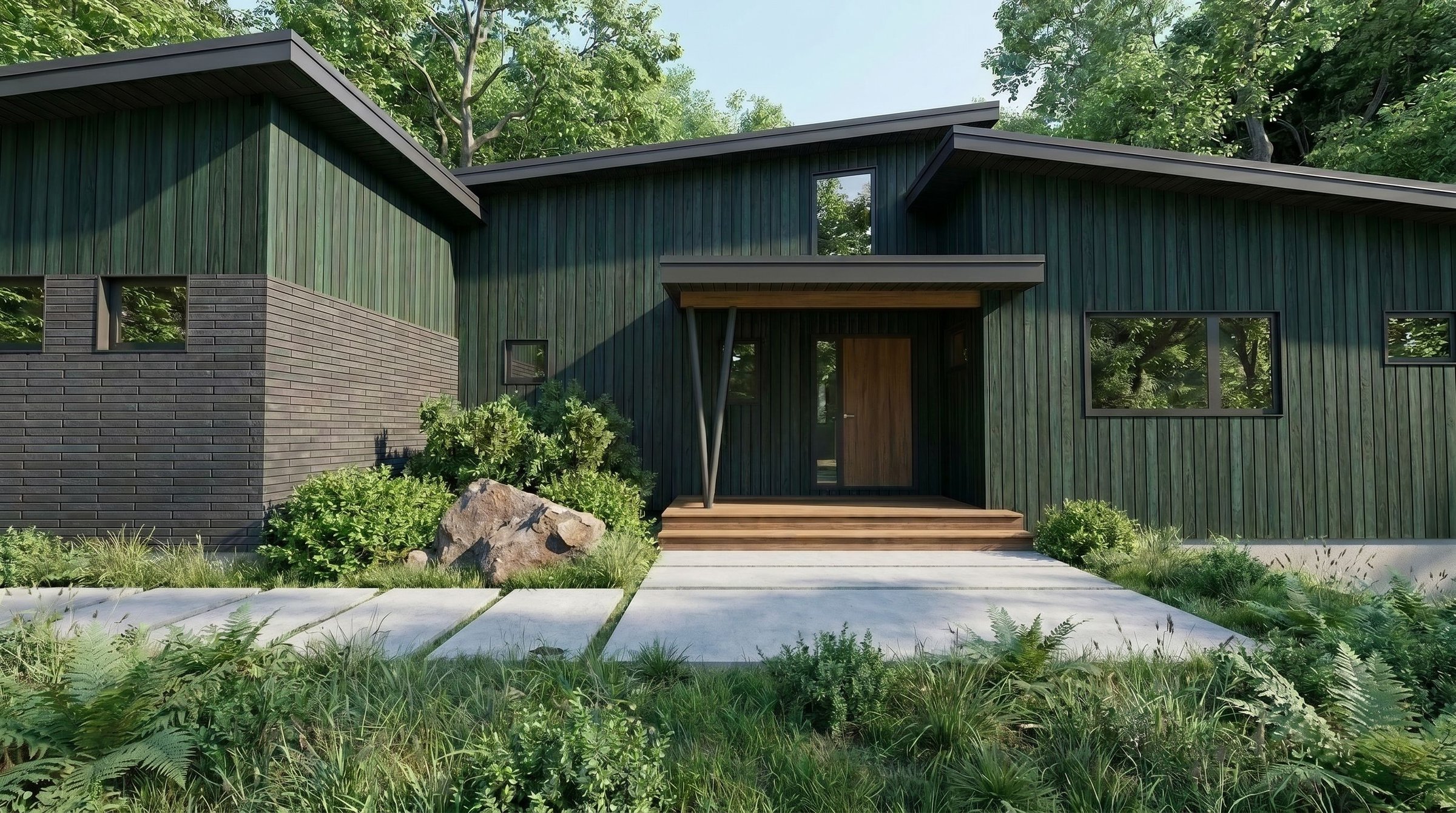
Project Info
- Type
- Residential
- Program
- Single-Family
- Location
- North Carolina
- Status
- In Construction
- Structure
- SIP panels, precast foundation
- Systems
- Solar carport, battery storage, ERV
- Services
- Schematic Design, Construction Documents, Interiors & Specs
Prefab over code minimum
This project was an opportunity to test a straightforward question: what does it actually require to build better? The structural system is SIPs over a precast foundation — both delegated systems that force decisions earlier than conventional framing. The envelope is continuous insulation, relatively thermal-bridge-free details, more airtight than most stick-builds, and energy-efficient windows. Not Passive House, but designed from the same perspective.
Early energy modeling showed the gap between this envelope and a code-minimum build clearly. The incremental cost difference is smaller than most expect — the bigger challenge is aligning subcontractors and getting the mechanical system properly sized for the improved envelope. The payoffs are real: operational savings, meaningfully better comfort, and durability that a simple ROI calculation doesn’t capture.
Site and energy design
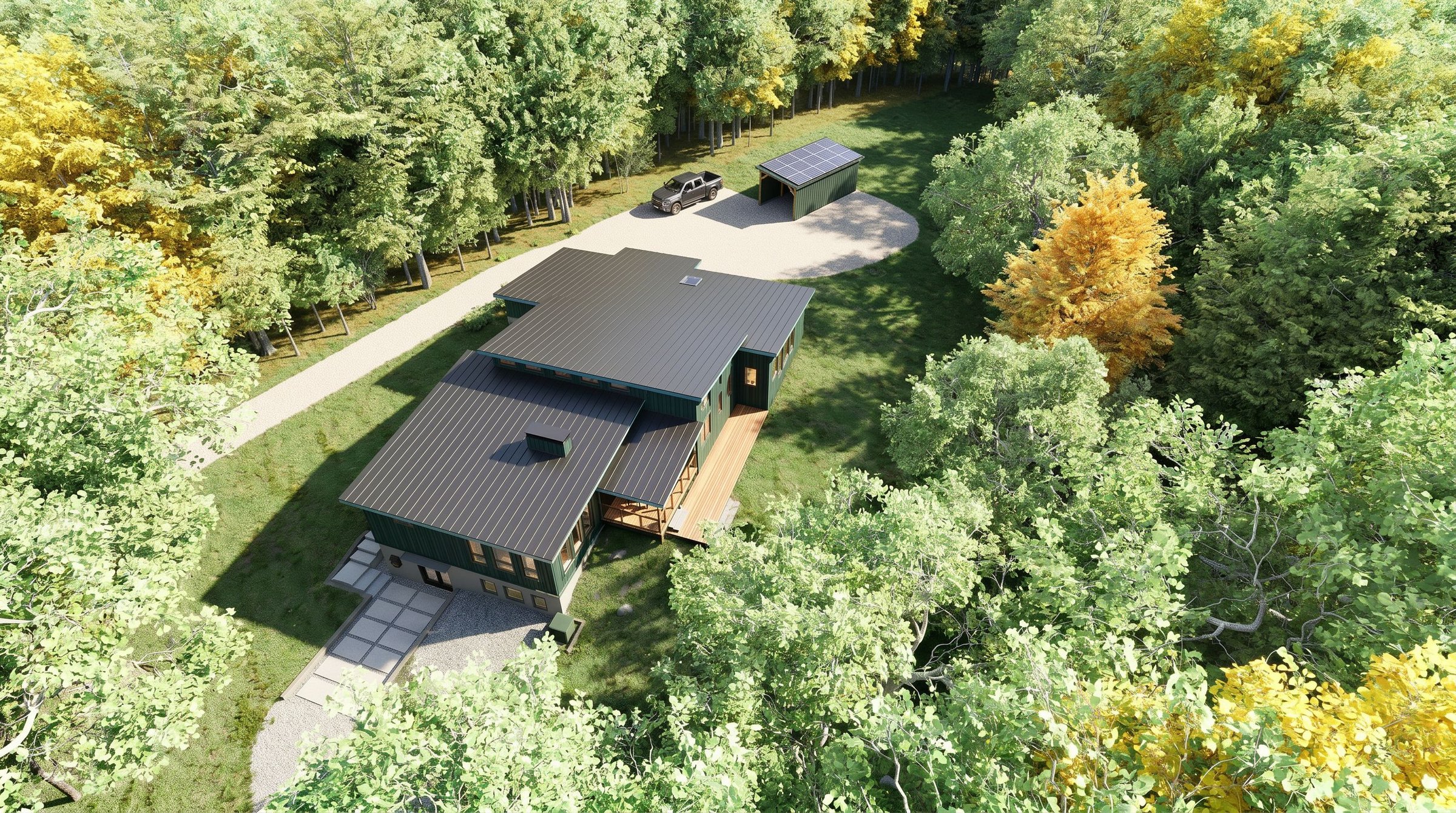
The client wanted to generate and store their own power. The carport is a proper structure — not a bolted-on afterthought — with a south-facing roof plane sized for a full PV array. The panels feed an on-site battery system, giving the household resilience against outages and meaningful energy independence.
Integrating the buildings into the site mattered. The house and carport share a structure, roofline, and material palette that read as part of the landscape — not structures imposed on it.
Systems coordination
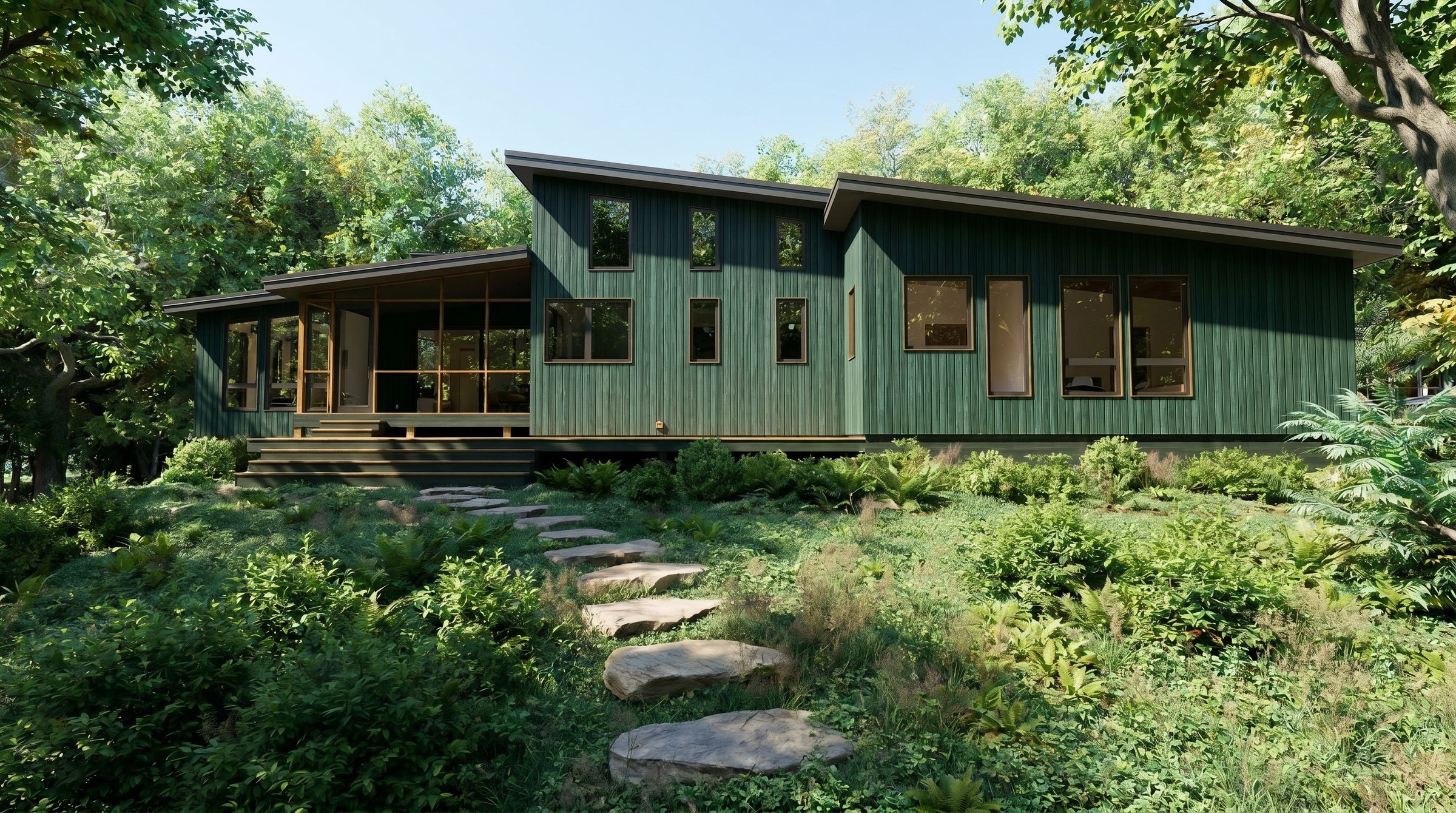
SIP & prefab foundation construction compresses the schedule and eliminates a category of site labor, but it demands that the mechanical, electrical, and plumbing be fully coordinated before panels arrive. There is no cutting into SIPs after the fact without cost and consequence. Front-loading that work — mechanical and ERV distribution, electrical routing, battery room sizing — so the field crew had a resolved set of documents from day one.
This is where prefab-informed design earns its keep: not in the panels themselves, but in the conversations it forces on the design process upstream.